 Volcano Motor
Por qué elegir motores BLDC para AGV y robots colaborativos?
En fábricas inteligentes modernas, No se puede subestimar la importancia de los motores BLDC. Estos motores funcionan sin escobillas físicas., que minimiza la fricción y la generación de calor.. This efficiency translates into quieter operation and higher performance, crucial for robotics and automated systems.
Automation has revolutionized manufacturing efficiency and productivity. Por ejemplo, automated machines using BLDC motors can reduce on-site labor requirements by up to 28%. This reduction accelerates project timelines by nearly 18%, allowing manufacturers to meet demands swiftly.
ⅠAGV Applications: Core Challenges and Key Technologies of BLDC Motors
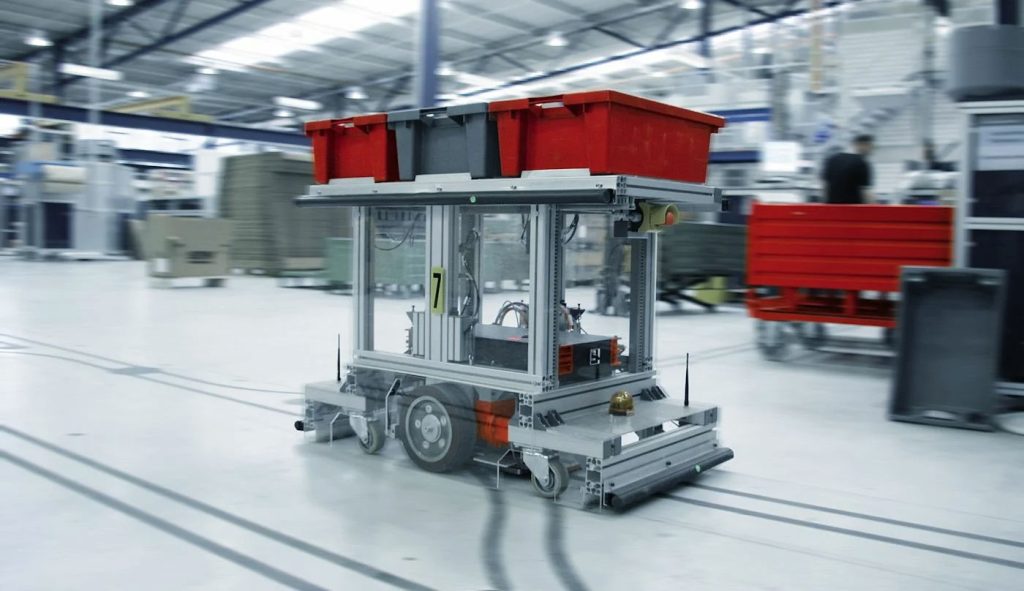
Vehículos guiados automatizados (AGV) Desempeñar un papel crucial en las fábricas inteligentes modernas.. Mejoran la eficiencia del manejo de materiales y agilizan las operaciones.. Sin embargo, La integración de motores BLDC en AGV presenta varios desafíos que los fabricantes deben abordar.
Core Challenges
- Modos de falla: Los motores BLDC en AGV pueden experimentar varios modos de falla. Comprender estos modos ayuda a implementar estrategias de mitigación efectivas.. La siguiente tabla describe los modos de falla comunes y sus soluciones.:
| Modo de falla | Descripción | Estrategia de mitigación |
| Desgaste de rodamientos | Afectado por cargas radiales, cargas axiales, vibración, avería de la lubricación, y contaminantes. | Seleccione rodamientos de alta calidad e implemente mantenimiento preventivo. |
| Calentamiento excesivo | Puede dañar el aislamiento del devanado., imanes permanentes, aspectos, y adhesivos. | Mantenga bajas temperaturas de funcionamiento y garantice una refrigeración adecuada.. |
| Mala calidad del controlador del motor | Puede provocar una sincronización de conmutación incorrecta y una ondulación excesiva de la corriente.. | Utilice controladores de velocidad electrónicos de alta calidad. (ESC). |
| Condiciones ambientales | Condiciones duras como el polvo, humedad, y las temperaturas extremas acortan la vida útil. | Mantener un entorno operativo limpio. |
| Sobrecarga mecánica | Operar más allá del par nominal resulta en un rápido aumento térmico y daños.. | Evite sobrecargar el motor.. |
2. Dimensionamiento incorrecto del motor: El tamaño incorrecto puede provocar un consumo excesivo de corriente y sobrecalentamiento..
3. Refrigeración y ventilación: Un enfriamiento inadecuado puede causar sobrecalentamiento, que puede dañar el motor.
4. Calidad del suministro de energía: Voltage fluctuations can lead to uneven current distribution, affecting motor performance.
Key Technologies
BLDC motors offer several advantages that enhance the performance of AGVs. These include:
• Energy Efficiency: BLDC motors consume less energy while maintaining high performance. This efficiency reduces operating costs and minimizes environmental impact. Por ejemplo, BLDC motors used in AGVs can exceed an average lifespan of 20,000 horas, significantly longer than traditional brushed motors.
• Smart Connectivity: These motors enable communication with other factory equipment, allowing for intelligent management of resources. This connectivity optimizes energy consumption and enhances operational efficiency.
• Advanced Control Technologies: Innovations in control technology improve the performance of BLDC motors. Por ejemplo, Siemens employs advanced algorithms that reduce torque ripple and enhance dynamic response.
Ⅱ Collaborative Robots: Precision and Intelligence Powered by BLDC Motors

Collaborative robots, or cobots, have transformed the landscape of automation in smart factories. These robots work alongside human operators, enhancing productivity and safety. The integration of BLDC motors in collaborative robots significantly boosts their precision and intelligence, making them indispensable in modern manufacturing environments.
Precision Benefits of BLDC Motors
BLDC motors provide several advantages that enhance the precision of collaborative robots:
| Precision Benefit | Descripción |
| Consistent low-speed control | Enables accurate positioning and alignment during slow operations. |
| Enhanced repeatability in assembly tasks | Improves the reliability of tasks requiring precision. |
| Improved responsiveness in adaptive motion systems | Allows for quick adjustments to movements, enhancing safety and efficiency. |
These benefits lead to stable motion under varying loads, improved operator confidence, and the accurate execution of delicate tasks. The ability of BLDC motors to maintain consistent performance under different conditions sets them apart from traditional motor types.
Key Performance Metrics
The performance of BLDC motors in collaborative robots is measured by several key metrics:
| Performance Metric | Key Benefits |
| High Conversion Efficiency | – Extended operational hours per shift – Reduced energy consumption – Stable performance under continuous workloads |
| Lower Heat Generation | – Consistent torque output over time – Lower risk of thermal shutdown – Extended component lifespan |
| Optimized Performance Across Variable Loads | – Efficient energy usage during low-load movements – Stable efficiency during peak torque demands – Reduced energy spikes in dynamic applications |
| Extended Uptime for Mobile Cobots | – Extended mission cycles – Reduced battery size and weight – Improved overall system mobility |
| Reduced Cooling Requirements | – Simplified mechanical integration – Lower system noise – Reduced maintenance requirements |
| Supporting Sustainable Automation | – Lower electricity costs – Reduced carbon footprint – Improved return on automation investment |
| Consistency in Multi-Shift Environments | – Reliable round-the-clock operation – Minimal performance drift – Improved production planning |
These metrics illustrate how BLDC motors outperform other motor types, such as brushed DC motors, in terms of efficiency and reliability. Their ability to generate high torque at low speeds further supports their suitability for precision tasks.
Enhancing Intelligence and Adaptability
The integration of BLDC motors enhances the intelligence and adaptability of collaborative robots. Las características clave incluyen:
| Característica | Benefit |
| High-resolution encoders | Improved precision in assembly and inspection |
| Torque sensors | Enhanced process consistency |
| Real-time diagnostics | Reduced defect rates through accurate motion control |
| Compatibility with advanced servo drives | Ensures precise motion control and fast system response |
| Support for modern industrial communication | Enables real-time data exchange and synchronization |
These features allow collaborative robots to adapt to changing environments and tasks, making them more versatile than traditional robotic systems.
Safety Features of BLDC Motors
Safety is paramount in collaborative robot applications. BLDC motors contribute to safety through several features:
| Safety Feature | Descripción |
| Precise torque and current monitoring | Ensures that the motor operates within safe limits by continuously monitoring torque and current levels. |
| Smooth, compliant motion profiles | Allows for gentle interactions with humans and objects, reducing the risk of injury. |
| Safe Torque Off (STO) functionality | Provides a quick way to disable torque, enhancing safety during maintenance or emergencies. |
| Rapid response to unexpected contact | Enables the system to react quickly to any unplanned contact, minimizing potential harm. |
These safety features make collaborative robots equipped with BLDC motors suitable for environments where human interaction is frequent.
Ⅲ Common Technologies: The Underlying Logic Driving Smart Factories

Smart factories rely on several key technologies that enhance the performance of BLDC motors. These technologies form the backbone of automation, enabling efficient and precise operations.
Control Algorithms
Advanced control algorithms play a crucial role in the functionality of BLDC motors. They ensure precise torque control and higher efficiency. Key aspects of these algorithms include:
- Control orientado al campo (FOC) for accurate torque management.
- Regulation of voltage, current levels, commutation timing, velocidad, esfuerzo de torsión, and acceleration profiles.
- Advanced pulse-width modulation (PWM) techniques for speed and torque control.
Future controllers are evolving into smart, adaptive systems with AI-driven algorithms and IoT-enabled monitoring.
Sensor Technologies
Sensor technologies, such as Hall-effect sensors, are vital for optimizing factory automation. These sensors provide essential rotor position information, which is necessary for effective phase commutation and current control. The use of low-cost Hall-effect sensors allows for efficient motor control while maintaining high reliability and efficiency in various industrial applications.
Protocolos de comunicación
Communication protocols facilitate real-time data exchange, which is crucial for the operation of BLDC motors in smart factory systems. They enhance interoperability, allowing motors from different manufacturers to integrate seamlessly into existing systems. Remote monitoring and control capabilities provided by these protocols improve operational efficiency by reducing the need for physical presence near the motors.
Contribution to Productivity
The underlying logic of BLDC motor control significantly contributes to overall factory productivity. The following table summarizes how various performance aspects enhance productivity:
| Performance Aspect | Contribution to Productivity |
| High Torque Generation | Supports high-load applications, enhancing operational capacity |
| Eficiencia | Reduces energy consumption, lowering operational costs |
| Precision | Improves accuracy in tasks, leading to better product quality |
| Customization | Adapts to specific industry needs, optimizing performance |
These technologies collectively empower smart factories to achieve higher efficiency, reduced costs, and improved product quality.
Ⅳ Selection Guide: Cómo elegir el motor BLDC adecuado para su robot
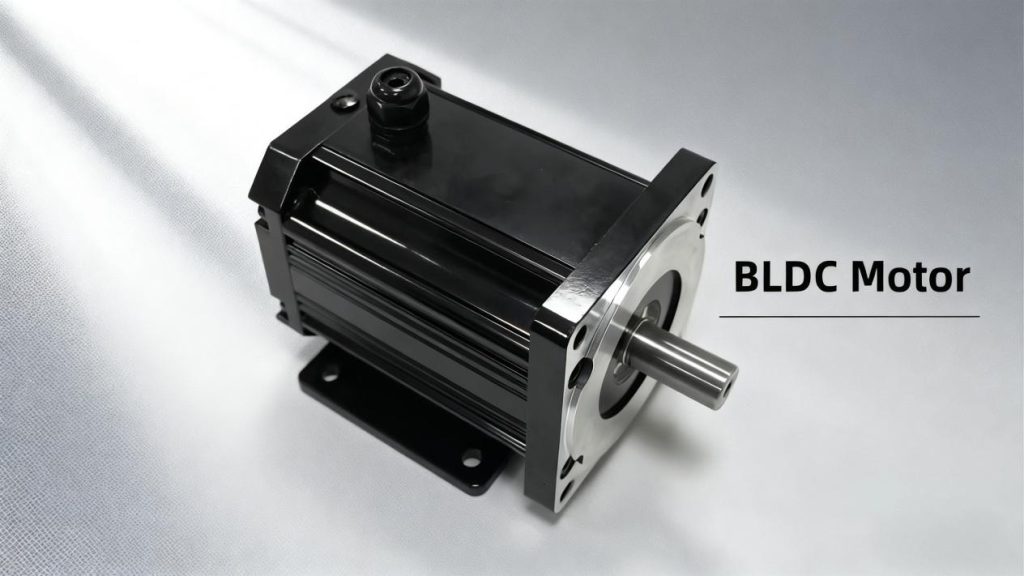
Selecting the right BLDC motor for robotic applications involves several critical criteria. Manufacturers must consider various factors to ensure optimal performance and efficiency.
Here are the key criteria to evaluate:
| Criteria | Descripción |
| Dynamic Response | Essential for precise control in robotic applications. |
| Densidad de par | High torque density minimizes the weight of the robot arm. |
| Integrated Feedback Devices | Encoders enable closed-loop control for better accuracy. |
| Low Rotor Inertia | Allows for rapid acceleration and deceleration, crucial for robotic motion. |
In addition to these criteria, manufacturers should also assess the following factors:
- Power and Torque: Match motor capabilities to robot requirements.
- Eficiencia: High efficiency reduces energy consumption during continuous operations.
- Tamaño y peso: Ensure the motor fits within the design constraints of the robot.
Understanding torque and speed requirements is vital. Consider the following aspects:
- Continuous Torque vs Peak Torque: Knowing the difference ensures the motor operates within thermal limits.
- Speed Requirements: Defined by application functionality, including base operating speed and maximum speed.
- Torque–Speed Curve: This curve illustrates how torque varies with speed, guiding proper motor selection.
- Inertia Matching: This ensures fast response and control accuracy by managing the relationship between motor and load inertia.
Environmental considerations also play a significant role in motor selection. Evaluate the following:
| Environmental Consideration | Descripción |
| Operating temperature range | The range of temperatures the motor can operate in. |
| Exposure to dust, humedad, or chemicals | The motor’s resilience against various contaminants. |
| Required ingress protection (Clasificación IP) | The level of protection against dust and water ingress. |
BLDC motors provide a balance between initial investment and long-term operational efficiency. They offer lower maintenance costs, mayor eficiencia, and longer service life, contributing to a favorable total cost of ownership.
Ⅴ How We Support Your Smart Factory Upgrade
Motor Manufacturers play a vital role in facilitating the transition to smart factories. Volcano Electric provides various solutions that enhance the integration of BLDC motors into existing systems. Our BLDC motors ensure that factories can upgrade their operations efficiently and effectively.
Servicios de soporte clave
The following table outlines the main support services offered by BLDC motor manufacturers:
| Service Offered | Descripción |
| Cost-efficient adaptations | Tailored solutions to meet specific requirements. |
| Specific solutions for complex installations | Customized approaches for intricate setups. |
| Simplification of motor control units | Making control units easier to manage. |
| Rapid prototyping for BLDC application | Quick development of prototypes for testing. |
| Increased product security | Enhanced security through tested software and hardware. |
| Integration of specific features | Adding tailored features to meet specific needs. |
| Solutions with multiple control methods | Offering various control options for flexibility. |
| Control of different BLDC-driven actuators | Managing various actuators within the powertrain. |
| Hardware and software platforms for BLDC control | Providing comprehensive platforms for motor control. |
To ensure compatibility with existing factory automation systems, manufacturers focus on several aspects:
- Selecting BLDC motors with flexible control interfaces ensures compatibility with existing systems.
- Scalable power ranges allow for future system expansions.
As manufacturers address the challenges of scaling BLDC motor solutions for large projects, we provide tailored motor solutions that meet specific industrial requirements. Customization includes aspects like corrosion resistance and torque optimization, ensuring seamless integration into existing systems.
BLDC motors play a pivotal role in enhancing the efficiency and reliability of AGVs and collaborative robots. Their high efficiency and durability make them essential for smart manufacturing. As the industry moves towards automation, the demand for advanced motor technologies will only increase.
By offering these motors, Volcano Electric empowers businesses to embrace smart factory upgrades confidently.
Preguntas frecuentes
Q1:¿Cómo mejoran los motores BLDC el rendimiento del AGV??
A1: BLDC motors enhance AGV performance through energy efficiency, precise control, and reduced noise. Their ability to maintain high torque at low speeds allows AGVs to navigate complex environments effectively.
Q2:¿Qué factores debo considerar al seleccionar un motor BLDC??
A2: Consider power, dynamic response, torque density, integrated feedback devices, and environmental conditions. Matching these factors to your application ensures optimal performance and efficiency in robotic systems.