 Vulkanmotor
So wählen Sie einen BLDC-Motor für Industriestaubsauger aus: Steigern Sie die Effizienz durch 30% (2026 Führung)
In der modernen Industrielandschaft, Vakuumsysteme – von der zentralen Staubabsaugung bis hin zu hochpräzisen Laborpumpen – unterliegen einem massiven technologischen Wandel. As energy costs rise and global efficiency mandates like IE4 and IE5 take effect, the transition from AC induction motors to Brushless DC (BLDC) technology is no longer optional; it is a competitive necessity. For B2B procurement teams, selecting the right motor is the foundation of system reliability and long-term profitability.
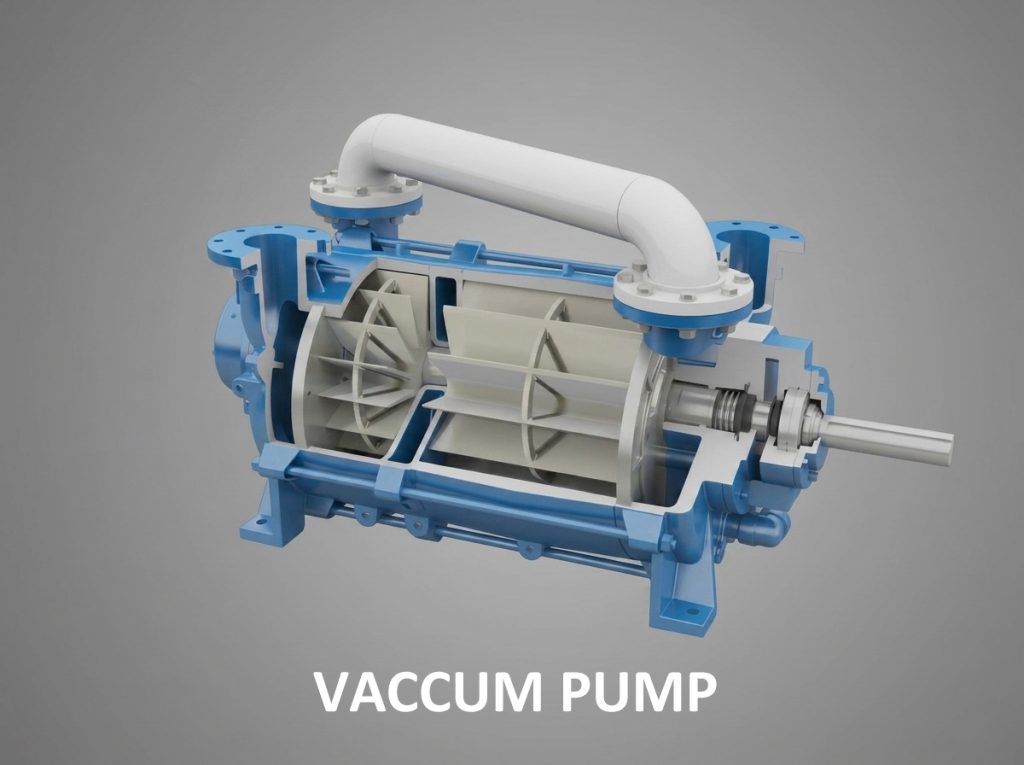
What is a BLDC Motor for Vacuum Systems?
A Brushless DC (BLDC) motor is a synchronous permanent magnet motor that replaces mechanical commutators and brushes with electronic controllers. In industrial vacuum applications, these motors provide the rotational force required to drive pump rotors—such as scroll, screw, or reciprocating vanes—without the friction and wear associated with carbon brushes.
For industrial environments, this means a “cleaner” operation with zero carbon dust contamination and significantly reduced electromagnetic interference (EMI). This makes BLDC technology the gold standard for cleanrooms, medical extraction, and high-uptime manufacturing lines.
Wie es funktioniert: Powering High-Performance Vacuum Systems
The performance of an industrial vacuum pump is dictated by its ability to maintain stable airflow and suction pressure under varying loads. BLDC motors achieve this through electronic commutation, where the controller monitors the rotor position (via Hall sensors or sensorless back-EMF) and adjusts the phase current accordingly.
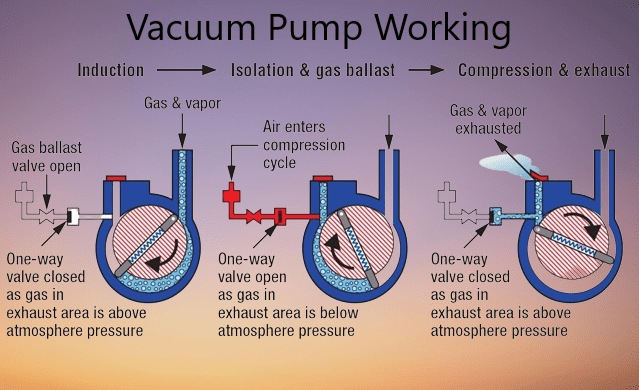
In a vacuum setup, the motor must overcome a significant pressure differential during startup. The electronic controller allows for a “soft start” feature, which prevents current spikes and mechanical shock to the pump rotors, thereby extending the mechanical life of the entire system.
Why BLDC Motor Outperforms Traditional Solutions
For B2B buyers, the move to BLDC is driven by three primary performance metrics:
Maintenance-Free Longevity: Without brushes to replace, a high-quality BLDC motor can exceed 10,000 Zu 20,000 hours of continuous operation, drastically reducing downtime in 24/7 production environments.
Compact Power Density: BLDC motors deliver higher torque in a smaller frame size. This allows OEMs to design more compact, portable vacuum equipment without sacrificing suction power.
Variable Speed Precision: Unlike fixed-speed AC motors, BLDC motors can modulate speed with near-perfect linear torque delivery. This ensures the vacuum level stays constant even if the number of extraction points on a factory floor changes.
Anwendungen: From the Factory Floor to the Lab
The versatility of BLDC motors allows them to excel across diverse vacuum topologies:
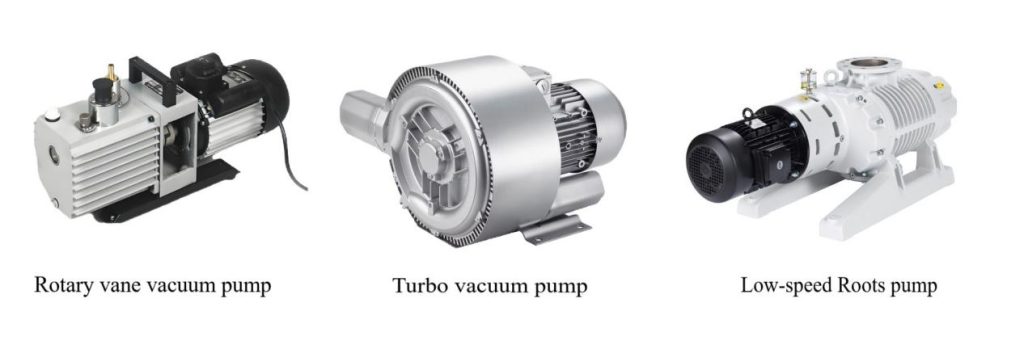
1. Rotary Vane and Scroll Pumps
These pumps require consistent speed to maintain a vacuum seal. BLDC motors provide the necessary closed-loop feedback to ensure that RPM does not drop as the vacuum depth increases.
2. High-Speed Centrifugal Blowers
In applications like industrial drying or light-material transport, BLDC motors can reach speeds that AC motors simply cannot achieve without expensive frequency inverters, all while maintaining a much smaller footprint.
3. Medical and Laboratory Extraction
Noise reduction is paramount in these settings. The smooth commutation of BLDC motors, combined with FOC controllers, results in a significantly lower decibel output compared to brushed alternatives.
How to Choose the Right BLDC Motor for Industrial Vacuum Equipment
Which Motor Types Buyers Should Compare
When sourcing motors for vacuum systems, B2B buyers generally evaluate three primary topologies: Brushed DC, AC Universal, and BLDC motors. While the upfront unit cost of legacy brushed motors remains attractive for entry-level commercial equipment, industrial-grade applications demand a rigorous Total Cost of Ownership (TCO) analysis.
Comparison: BLDC Motor Specifications for Vacuum Equipment
BLDC motor performance and parameter requirements differ by vacuum equipment type.
| Parameter | Portable/Medical Vacuum | Industrial Dust Extraction | High-Vacuum Scroll Pumps |
| Common Voltage | 24V / 48In DC | 310In DC / 400V und | 310In DC |
| Speed Range | 3,000 – 10,000 U/min | 1,500 – 4,500 U/min | 3,000 – 6,000 U/min |
| Typical Power | 50W – 500W | 1.1kW – 7.5kW | 500W – 3kW |
| Control Priority | Low Noise / Size | Hohes Drehmoment / Haltbarkeit | High Precision / Heat Control |
| IP-Bewertung | IP40 – IP50 | IP54 – IP65 | IP50 – IP54 |
BLDC Motor Selection for Vacuum Systems: A Four–Step Practical Guide
Let’s be honest: picking a motor for a vacuum system isn’t rocket science, but get it wrong and you’ll spend months dealing with poor suction, overheating, or field failures. Over the years, I’ve seen the same mistakes pop up again and again. So here’s a straightforward, step‑by‑step approach that actually works.
Step 1 – Map Out Your Torque Demands
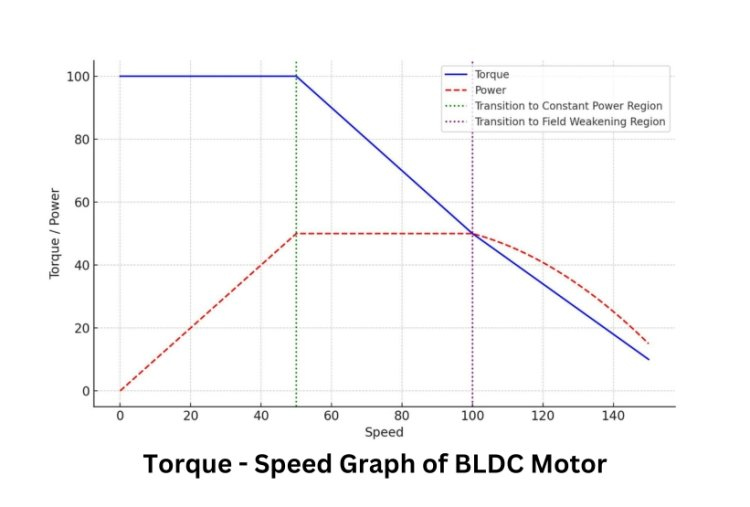
Vacuum pumps are constant‑torque beasts. That means once they’re running, the torque requirement doesn’t swing wildly. But the tricky part is startup and pressure spikes – like when the filter gets clogged and suddenly releases.
What you need: a starting torque at least 150% of the rated running torque. Skimp on this, and the motor may just sit there humming, unable to break the internal pressure. This is especially true for scroll and rotary vane pumps, which have a high pressure differential when stopped.
Auch, pay attention to torque ripple. Six‑step commutation motors vibrate more – that shaking goes straight into the pump head and bearings. FOC motors are much smoother. If you’re building a lab or medical vacuum where noise matters, FOC is worth the extra few dollars.
Quick tip from the shop floor: Ask for a torque‑speed curve measured at the shaft, not a generic datasheet. Look for a flat torque plateau from zero speed up to about 80% of max RPM. If the curve nose‑dives early, that motor will struggle under real load.
Step 2 – Get Voltage and Power Right (And Don’t Forget Air Watts)
Voltage is usually dictated by your power source. Mains‑powered gear? 310In DC (rectified from 220V AC) is the standard. Battery‑powered or mobile units? Stick with 24V or 48V DC.
Leave yourself a 15‑25% safety margin on power rating. Running a motor at 100% laden 24/7 is a sure way to cook the windings and kill reliability.
Here’s something a lot of engineers overlook: input power tells you almost nothing about real suction performance. The number that actually matters is Air Watts – which combines airflow and static pressure. Think of it as the “real work” the motor‑impeller combo can do. For example, a decent 800W BLDC motor should deliver somewhere between 250 Und 350 Air Watts. If a supplier claims high wattage but delivers far less than that range, their design is either inefficient or the impeller is a bad match.
Step 3 – Don’t Underestimate Sealing (IP-Bewertung)
Vacuum systems live in nasty places – cement dust, carbon black, metal shavings, even water splashes from wet/dry pickups. The IP rating is your first line of defense.
For a central dust extraction system that’s close to the source, IP54 is the minimum acceptable. It keeps dust out well enough that you won’t get harmful deposits.
But if the motor sits on a moving sweeper or runs in concrete grinding, go with IP65. It’s fully dust‑tight and can handle low‑pressure water jets – so an occasional hose‑down won’t kill it.
When you send out RFQs, be specific about the dust type (conductive carbon? fine silica?) and how you clean (compressed air? pressure washer?). For conductive dusts like graphite or metal powders, insist on anti‑static seals and at least IP65. Otherwise you risk electrical tracking across terminals – and that’s a fire hazard.
Step 4 – Make Sure the Controller Can Talk to Your System
The motor controller has to speak the same language as your PLC or main control board. The interface you pick affects cost, wiring complexity, and how much diagnostic data you can pull.
Here’s what’s out there, in plain terms:
- PWM: Cheap and simple. A square wave signal (0‑5V or 0‑10V) sets the speed. Fine for basic adjustable-speed vacuums that don’t need feedback.
- 0-10V analog :Linear ramping. Good for retrofitting old AC motor systems with analog controls.
- CAN-Bus (CANopen) :Two‑wire, real‑time feedback on speed, aktuell, Temperatur, faults. The go‑to for multi‑motor setups and Industry 4.0.
- RS‑485 / Modbus RTU :Rugged serial that works over long runs (up to 1200m). Excellent for centralized vacuum networks with many pumps spread around a facility.
What about going sensorless? Most modern BLDC vacuum motors use sensorless FOC – fewer parts to break, and still very good speed control. But if you need to run below 500 RPM under full vacuum load, you’ll want a motor with Hall sensors or an encoder. Sensorless just isn’t as stable down there.
Which Comparison Criteria Matter Most for OEMs and Distributors
For OEMs and wholesale distributors, the decision matrix involves weighing upfront manufacturing costs against field reliability and regulatory compliance. The European Union’s Ecodesign directives, Zum Beispiel, strictly regulate the energy efficiency of industrial vacuums, pushing manufacturers heavily toward brushless solutions.
| Motortyp | Expected Lifespan (Hours) | Peak Efficiency | Relative Unit Cost | Maintenance Requirement |
| BLDC-Motor | 10,000 – 20,000 | 85% – 92% | Hoch (1.5x – 2.0x) | Zero (sealed bearings only) |
| Brushed DC | 500 – 1,500 | 60% – 75% | Low (1.0x) | Hoch (brush replacement) |
| AC Universal | 800 – 2,000 | 55% – 70% | Medium (1.2x) | Hoch (brush replacement) |
Distributors must consider Return Merchandise Authorization (RMA) rates. Upgrading to a BLDC motor can drop warranty claim rates from a historical 4% down to under 0.5%, drastically reducing reverse logistics costs. Zusätzlich, OEMs prioritizing compact, lightweight form factors for backpack or portable industrial vacuums will find that BLDC motors offer a superior power-to-weight ratio, directly impacting user ergonomics and marketability.
The Case Study: 1.5kW AC Induction vs. 1.5kW BLDC Motor
For B2B procurement professionals, Die “sticker price” of a motor is only the tip of the iceberg. To truly evaluate the value of an upgrade, one must look at the Total Cost of Ownership (TCO) over the motor’s lifecycle. In 24/7 industrial vacuum applications, energy consumption typically accounts for over 90% of a motor’s lifetime cost.
Let’s examine a real-world scenario: a facility operating a continuous-duty vacuum system for 7,000 hours per year (typical 24/7 operation with minor maintenance windows).
Scenario Parameters:
Motor Rating: 1.5 kW
Electricity Cost: $0.12 pro kWh (Average industrial rate)
Operating Hours: 7,000 hours/year
| Cost Factor | Standard AC Induction Motor (IE2) | High-Efficiency BLDC Motor |
| Efficiency Rating | ~78% | ~92% |
| Input Power Required | 1.92 kW | 1.63 kW |
| Annual Energy Use | 13,440 kWh | 11,410 kWh |
| Annual Electricity Cost | $1,612.80 | $1,369.20 |
| Annual Energy Savings | — | $243.60 per unit |
| Maintenance Cost (3 Years) | $150 (Bearing & Brush checks) | $0 (Wartungsfrei) |
| Estimated 3-Year Savings | — | $880.80 per unit |
While a high-performance BLDC motor might have a higher initial purchase price (typically 20%–40% more than a basic AC motor), the Return on Investment (ROI) is rapid.
Direct Energy Savings: As shown above, a single 1.5kW unit saves nearly $250 annually. For a facility running 10 such units, this translates to $2,500 in pure profit added back to the bottom line every year.
Reduced Thermal Stress: Because BLDC motors are more efficient, they generate less waste heat. In vacuum applications, this means internal seals and bearings last longer, reducing the “hidden costs” of unscheduled downtime—which can cost an industrial facility thousands of dollars per hour.
Elimination of Maintenance Labor: By removing carbon brushes, you eliminate the labor costs and specialized tool requirements for periodic motor inspections.
FAQs
Q: Is the higher initial cost of BLDC motors justified for vacuum applications?
A: Absolut. When you factor in a 30% reduction in electricity costs and the elimination of bi-annual brush replacements, Die Return on Investment (ROI) is typically realized within the first two years of operation.
Q: What is the typical lifespan of a BLDC motor in a 24/7 industrial environment?
A: With proper thermal management and high-quality bearings, these motors can easily exceed 10,000 Std.. The primary wear item is the bearing, not the electrical components.
Q: Can these motors be customized for specific vacuum pump shafts?
A: Ja. Volcaomotor specialize in customizing shaft dimensions, mounting flanges, and winding parameters to match OEM specifications perfectly.
Abschluss
Choosing a BLDC motor for industrial vacuum equipment is an investment in efficiency and reliability. By matching the correct torque profile, Stromspannung, and control method, procurement teams can significantly lower the Total Cost of Ownership while meeting the rigorous demands of modern manufacturing.
Looking for a high-performance BLDC motor for your vacuum or compressor project?
Bei Volcaomotor, we specialize in providing high-efficiency, customized motor solutions designed for the most demanding industrial applications. Our engineering team is ready to help you optimize your system performance.
Contact us for customized solutions:
Email: info@volcaomotors.com