 Moteur Volcan
Moteurs EC pour ventilateurs de plafond industriels: 2026 Efficacité & Guide d'épargne
EC Motors for Industrial Ceiling Fans Everything You Need to Know
The design of EC external rotor motors results in a more compact and lightweight structure, lower energy consumption, and quieter operation, making them an ideal choice for large-scale applications across various industrial environments. Given their exceptional efficiency and performance, manufacturers of industrial ceiling fans are increasingly favoring these motors, as they enhance airflow effectiveness while simultaneously minimizing maintenance requirements.
Structure of EC Motors
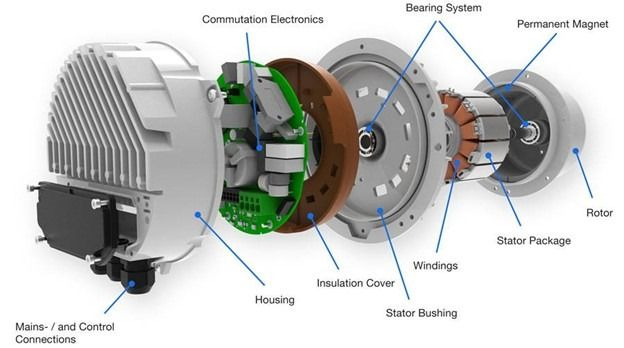
The structure of the EC outer rotor motor significantly differs from that of the inner rotor motor. In an outer rotor motor, the rotor is positioned outside the stator, allowing it to rotate around a fixed stator. This design leads to several advantages in performance and application.
- The rotor of an outer rotor motor is larger, providing higher inertia and smoother operation at low speeds.
- outer rotor motors can produce higher torque due to a larger air gap area and radius.
- Internal rotor motors typically have a higher speed compared to outer rotor motors.
- Applications for outer rotor motors include drones and industrial tools, while internal rotor motors are used in generators and compressors.
The following table summarizes the key differences between outer and inner rotor motors:
| Fonctionnalité | Outer Rotor Motor | Inner Rotor Motor |
| Rotor Position | Outside the stator | Inside the stator |
| Size of Rotor | Larger, leading to higher inertia | Smaller, leading to lower inertia |
| Torque Production | Higher due to larger air gap and radius | Lower due to smaller air gap and radius |
| Application | Ideal for drones, les fans, and industrial tools | Common in generators and compressors |
| Vitesse | Generally lower than inner rotor motors | Generally higher than outer rotor motors |
| Stability | High stability due to larger rotor size | Lower stability due to smaller rotor size |
The larger rotor size enhances stability and torque production, making these motors particularly suitable for applications requiring consistent airflow and low noise levels.
Outer Rotor vs. Inner Rotor: Comparaison des performances
When comparing outer rotor and internal rotor BLDC motors, several performance factors come into play, particularly torque output.
Torque Characteristics
The torque output of a motor significantly influences its performance in various applications. The following table summarizes the torque characteristics of both motor types:
| Type de moteur | Torque Characteristics |
| Outer Rotor | Higher torque due to larger air-gap radius, beneficial for high-torque, low-speed applications. |
| Innner Rotor | Generally produces lower torque compared to outer rotor designs for the same size. |
Outer rotor motors excel in generating higher starting torque. This feature enhances load handling at low speeds, making them ideal for heavy-load applications. En revanche, internal rotor motors exhibit lower starting torque, which limits their effectiveness in similar scenarios.
Starting Torque Comparison
The following table highlights the differences in starting torque between the two motor types:
| Type de moteur | Starting Torque Characteristics |
| Outer Rotor | Excels in generating higher starting torque, enhancing load handling at low speeds. |
| Inner Rotor | Less effective in generating starting torque, making it less suitable for applications requiring high torque. |
The larger rotor radius of outer rotor motors contributes to their increased torque arm. This design allows them to handle heavy loads more efficiently than internal rotor motors, which struggle in high-torque situations.
Key Technical Points
Designing EC motors for industrial ceiling fans involves addressing several technical challenges. Key considerations include:
- Torque Efficiency: Achieving high torque efficiency is crucial. Motors should maintain an efficiency level of at least 80% to optimize energy consumption.
- Environmental Resistance: Maintaining dust and water resistance is essential. An IP55 rating protects the motor from environmental factors, ensuring longevity and reliability.
- Thermal Management: Effective thermal management is vital for performance. Motors must operate efficiently across a wide temperature range, typically from -20°C to +85°C.
- Longevity: The expected lifespan of these motors ranges from 60,000 à 75,000 heures. This longevity is supported by using dual ball bearings and robust winding insulation.
- Aerodynamic Noise Management: Blade design plays a significant role in managing aerodynamic noise. Par exemple, using five-blade designs can significantly reduce noise levels.
- Integration Challenges: Integrating outer rotor motors with existing stators and controllers can pose challenges. Manufacturers must ensure compatibility to maintain performance.
- Supply Chain Issues: Quality assurance and supply chain management are critical. Ensuring that all components meet quality standards can be a complex process.
The materials used in constructing EC motors also contribute to their performance. Common materials include:
- Permanent Magnets: These are used in the rotor to enhance magnetic efficiency.
- Laminated Steel and Windings: The stator typically incorporates laminated steel and windings, which improve electromagnetic performance and reduce energy losses.
Control algorithms significantly impact fan performance in industrial environments. The following table outlines the advantages and disadvantages of different control methods:
| Control Method | Avantages | Inconvénients |
| Sensored | Precise commutationsmooth low-speed operationsimplified controlreliable startup | Higher cost, reliability issues in noisy environments, limited high-speed operation due to sensor update rate |
| Sensorless | Improved reliability reduced costpotential for higher speeds | Increased algorithm complexity, challenges at low speeds, dependence on motor parameters for calibration |
Understanding these technical points helps manufacturers and engineers optimize the design and application of EC outer rotor motors in industrial ceiling fans.
Selection Guide for CE Moteurs
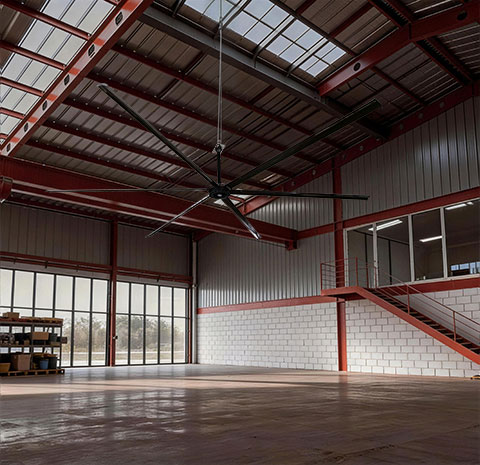
Selecting the right EC motor for industrial ceiling fans requires careful consideration of several key parameters. These factors directly impact the motor’s performance, efficacité, and suitability for specific applications.
- Couple: Evaluate both maximum and RMS torque. Ensure the motor can handle the required load with an adequate safety margin.
- Rotational Speed (RPM): Determine the necessary speed for optimal airflow. Different applications may require varying RPM levels.
- Power Rating: Assess the power rating to ensure the motor meets the energy demands of the fan system.
- Type de moteur: Choose an outer rotor motor for better heat dissipation and low-speed operation. This design enhances overall efficiency.
- Voltage and Current: Confirm the voltage and current specifications align with the existing electrical infrastructure. Compatibility is crucial for safe operation.
- Waterproof Rating: Consider the environment where the fan will operate. A suitable waterproof rating protects the motor from moisture and dust.
When selecting an EC outer rotor motor, manufacturers should prioritize these parameters to ensure optimal performance. Each factor plays a vital role in the motor’s ability to deliver consistent airflow while maintaining energy efficiency.
By following this selection guide, industries can enhance their operational efficiency and reduce maintenance costs. The right EC motor will provide reliable performance in demanding environments.
PV Industry Ceiling Fan Solutions
Technology Overview
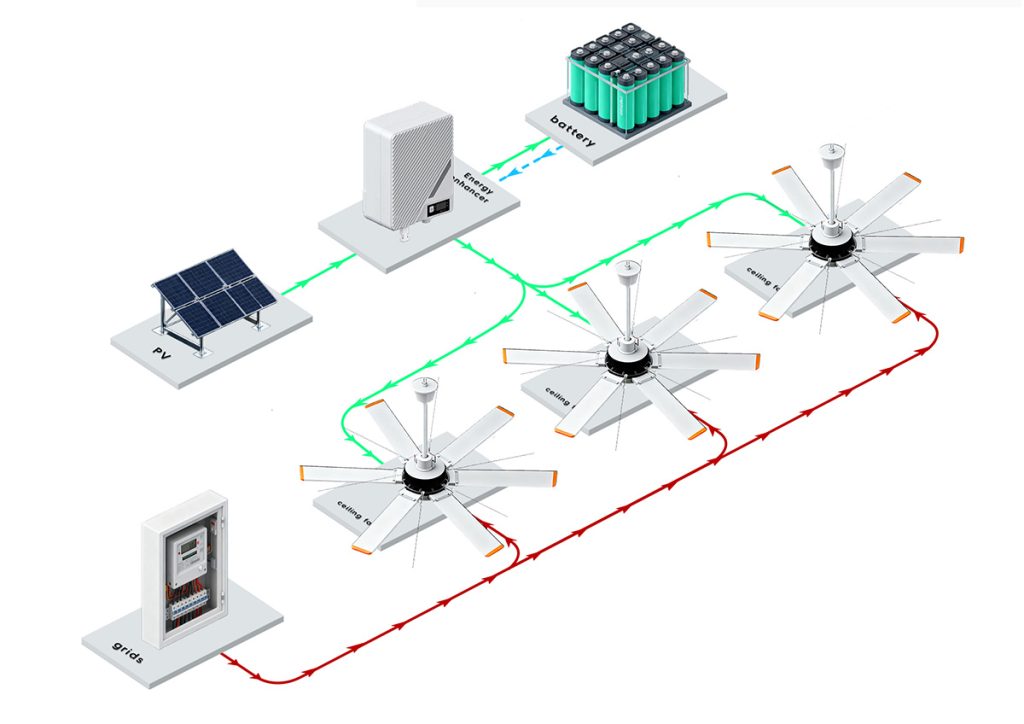
ParaFlow technology enables green power microgrids that allow free‑flowing PV electricity to loads. Its multi‑MPPT input design supports parallel expansion for flexible green power capacity scaling.
There are two ways to reduce fan energy consumption:
Improve motor technology to lower energy use
Use completely free renewable energy
Based on the application characteristics and pain points of fans, we have launched a groundbreaking PV-powered fan system integrating ParaFlow technology and SolarChasing technology.
Core Features
1. Pure PV Operation
During daylight, the fan can run at full power using only PV energy.
When sunlight weakens, SolarChasing technology dynamically identifies available solar power and automatically matches the fan speed.
No power outage stops the fan – as long as there is light, the fan keeps running.
2. AC‑DC Hybrid Operation
Real‑time coupling with the utility grid enables constant power operation.
Any power shortage is dynamically supplemented by the AC grid: supply the exact wattage needed.
Seamless switching ensures stable and reliable operation.
3. ParaFlow Microgrid Operation (The most practical energy‑sharing technology)
One PV array can serve multiple fan systems.
PV energy flows freely among multiple fans.
Multi‑channel energy management with the AC grid.
All fans under the microgrid can achieve AC‑DC hybrid operation.
4. Expandable Energy Storage
An energy storage system can be added at a microgrid node.
Enables excess PV energy storage + emergency backup operation.
Engineering Advantages
| Advantage | Description |
| No change to electrical topology | The original fan wiring remains unchanged – extremely low retrofit cost. |
| Fan cost remains essentially the same | No significant increase in fan body cost. |
| PV microgrid interface ready | Easy future upgrade to PV powered fan operation. |
Real-World Case Study of Fan Upgrades
A recent case study highlights the significant benefits of upgrading to outer rotor EC motors in industrial ceiling fans. This upgrade led to remarkable performance improvements across various metrics.
The following table summarizes the specific enhancements observed after the transition:
| Improvement Type | Value |
| Energy Efficiency Improvement | Up to 35%-100% |
| Power Consumption Comparison | Three times less than induction motors |
| Annual Energy Savings per Fan | Ranges from 10.09 kWh to 16.65 kWh |
The transition to outer rotor EC motors resulted in decreased energy consumption across multiple applications. Research indicates that these motors significantly reduce heating losses and optimize operational parameters. Key benefits include:
- Energy efficiency above 90%
- Strong torque for stable airflow
- Compatibility with smart industrial systems
Moreover, the return on investment (Retour sur investissement) period for upgrading to outer rotor BLDC motors typically ranges from 1 à 2 années. This short payback period underscores the economic advantages of transitioning to energy-efficient EC axial fans.
Outer rotor EC motors offer unmatched energy efficiency, high torque, and quiet operation. They reduce energy use by up to 70% compared to traditional AC fans, making them cost-effective and eco-friendly. Industries benefit from their long lifespan and reliable performance in demanding environments. These motors also support smart features like IoT integration and predictive maintenance, aligning with future industrial trends.
FAQ
What is an outer rotor BLDC motor?
An outer rotor BLDC motor features the rotor outside the stator. This design enhances torque production and efficiency, making it ideal for applications like industrial ceiling fans.
How does energy efficiency compare between outer and inner rotor motors?
outer rotor motors typically achieve higher energy efficiency than internal rotor motors. They reduce energy losses due to brush friction and optimize airflow, leading to lower operational costs.
What is the lifespan of an outer rotor BLDC motor?
The lifespan of an outer rotor BLDC motor ranges from 60,000 à 75,000 heures. This longevity results from robust construction and effective thermal management.
Interested in EC motors? Reach out to us at info@volcanomotors.com. We provide a complete série of outer rotor and inner rotor EC motors, all backed by custom design services to meet your specific requirements.